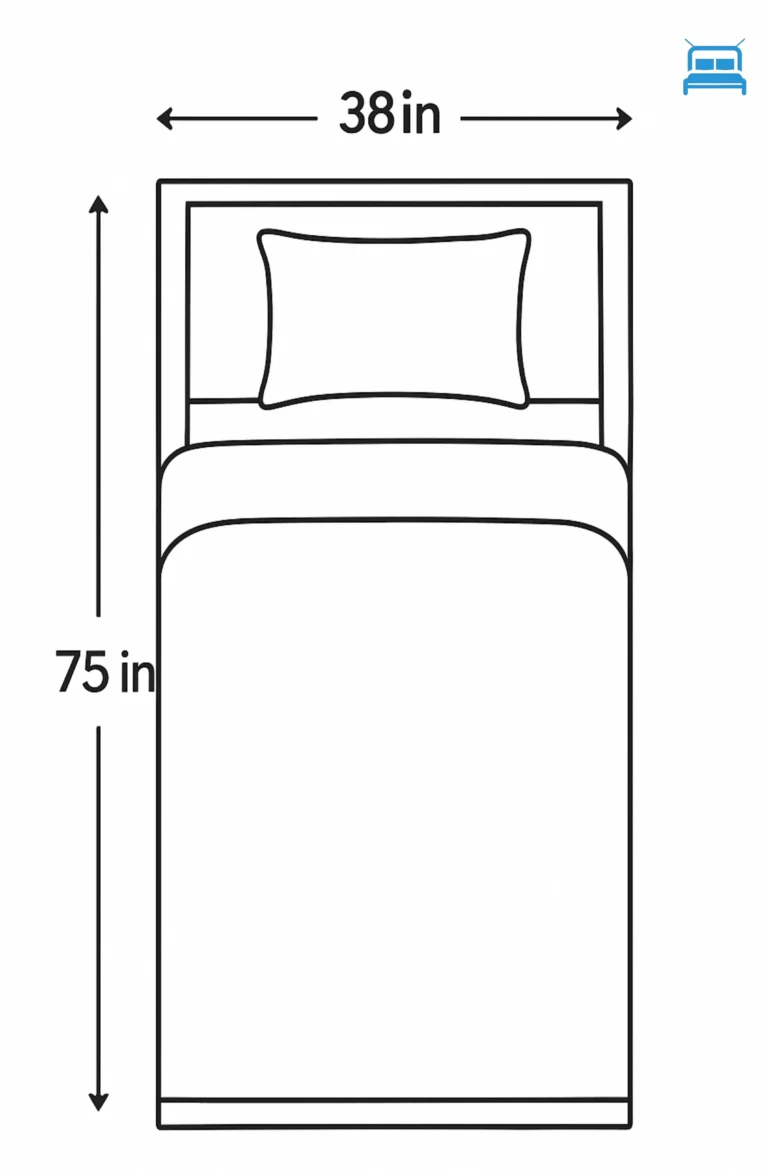
Infant Bed Mattress
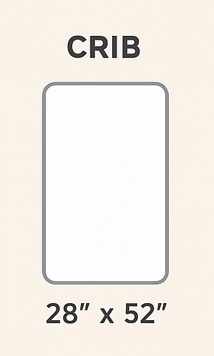
With the arrival of a newborn, parents must face the delight of a new life and the distress caused by caring for the very delicate little being; the most important among these is to create a safe sleeping environment. The selection of a crib and a mattress is hence one of the most important choices that will be made. Although it may seem like a simple purchase, being aware of how to select the crib mattress size accurately is really critical, as it will influence both the safety and comfort of your infant. This guide is intended to equip you with all the necessary information to make your little one’s first bed the right size for her. Below you can see dimensions for crib size mattress.
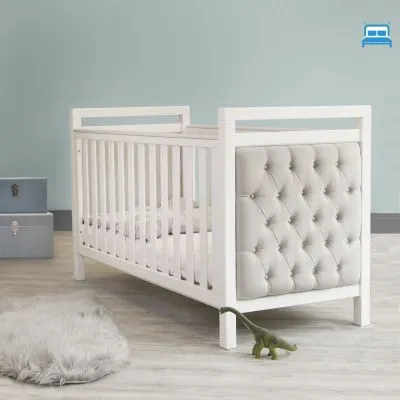
Why Crib Mattress Size Matters So Much?
Safety is the main reason for the stringent regulations that have been laid down regarding the crib mattress sizes. If the mattress is smaller than it is supposed to be, it will not fit the crib perfectly, thus producing unsafe spaces at the sides, corners, or ends. These gaps are hottest places for babies to get trapped and suffocated as they may roll or slide into the gaps unwittingly and get stuck, clueless about the air. On the contrary, the large mattress will not rest flat, causing a bumpy and unsafe sleeping area and possibly putting the crib’s structure under stress. A snug and firm fit that corresponds to both the width and the length of a crib is the rule of thumb for a safe sleeping area
The California federal mattress standards will allow anyone who has a standard crib size to have it fitted and standard crib mattresses to be available for use in that particular crib. This reduces the chances of mixing up unsafe crib and mattress combinations, besides ensuring that parents can pick the crib and mattress of their choice without any safety doubts. The dimensions of a regular crib are meant to provide a tight fit with standard crib mattresses, hence a safe and cozy sleeping environment for babies. In addition to that, a mini crib mattress size is available for infants who take up less space in a small area. Always verify with the mattress specifications whether it is for crib size before making a purchase to ensure it complies with the basic safety regulations.
| Mattress | Dimensions (Inches) | Dimensions (Centimeters) | Suitable For |
| Crib | 27″ x 52″ | 69 cm x 132 cm | Infants & toddlers |
Understanding the Standard Crib Mattress Size
The description standard crib mattress indicates a spot covered by the federal safety regulations concerning its dimensions. The mentioned regulations grant the manufacturers the liberty to keep the dimensions of the crib mattress consistent. Thus, it becomes easier for the parents to buy a mattress that is safe and perfectly fitted for their crib. The U.S. Consumer Product Safety Commission (CPSC) sets the limit for crib mattress measurements below which their dimensions must be. According to the crib mattress measurements standard, a crib mattress with a width of 27 1/4 inches and a length of 51 5/8 inches, with a thickness of 6 inches, is the least allowable maximum size.
Typically, a crib-sized mattress has dimensions that are between 27 1/4 and 28 inches in width (approximately 70 cm) and 51 5/8 to 52 inches in length (around 132 cm). The mattress must not be thicker than 6 inches (roughly 15 cm) for the sake of safety, which also helps to prevent the baby from getting out. To sum up, the mattress size that has been standardized for cribs is roughly 28 inches by 52 inches, which is pretty much the same as the crib size, which is 28 5/8 inches wide and 53 inches long.
This kind of fitting does not create any openings that might be hazardous between the mattress and the crib. The size of the baby crib mattress is generally 28” x 52”, and they are perfectly fitted and checked for safety within the standard crib dimensions. The size regulation for a standard crib mattress is done very strictly so that safety and compatibility with all full-size cribs are ensured. The length of the crib mattress is approximately 52 inches. Crib-size mattress size is very good for a toddler.
The two-finger test is a method that parents use to determine whether their child’s mattress is suitable for the crib. They only have to check if the space between the mattress and the crib can hold two fingers. If the space is larger, it’s an alert that the mattress is smaller than the crib and, therefore, potentially unsafe for the baby. Choosing the right mattress size for the crib is very important because it provides safety and comfort for infants. A tight fit removes the possibilities of pinching or smothering.
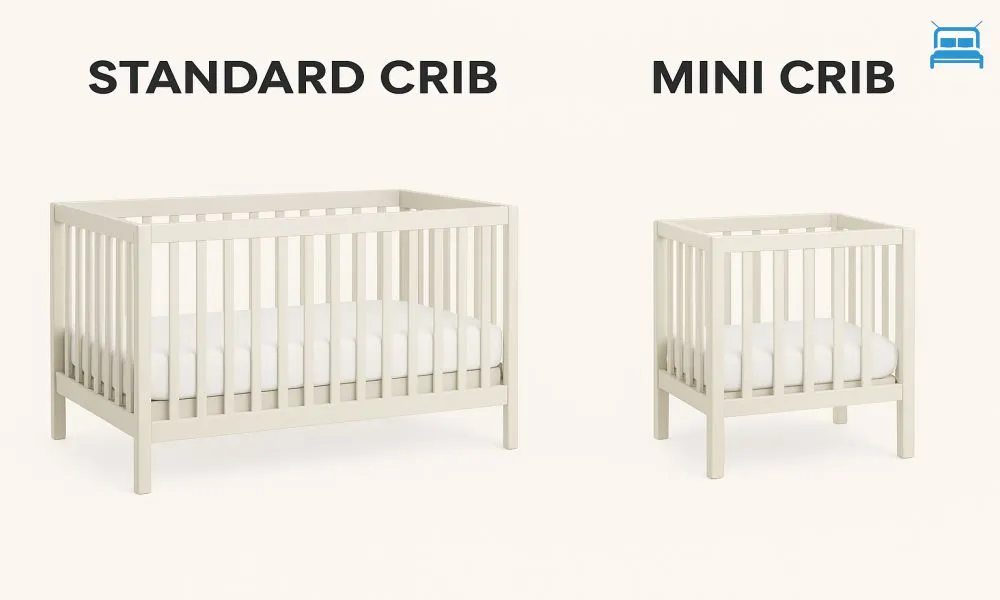
Mini cribs are characterized by their smaller sizes compared to standard cribs and are generally set up in small rooms or apartments. However, the small measurements for crib mattresses still comply with safety regulations and are space-saving. On the whole, the majority of parents still lean toward a standard crib as the best choice because it is a longer-lasting product – it can easily accommodate both the newborn and the toddler.
Mattress dimensions for standard crib size are regulated in order to provide standardization across different production companies. The U.S. Consumer Product Safety Commission (CPSC) defines the minimum dimensions for standard crib mattresses to be at least 27 ¼ inches wide and 51 ¼ inches long with a maximum thickness of 6 inches. Mattress sizes for crib design guarantee ideal fitting inside the crib frame so that the parents can be assured that their baby is safe and comfortable during the night.
Standard Cribs vs. Mini Cribs: A Key Distinction
The term ‘standard crib mattress’ refers to a size that is set by the federal safety regulations and standards. Consequently, the standard size of a crib mattress is a topic that agrees with the manufacturers and also makes it easier for the parents to buy the right mattress for their baby’s crib, as the sizes are the same across the different manufacturers. The U.S. Consumer Product Safety Commission (CPSC) has laid down certain limits for the measurements of crib mattresses, within which they must comply with. The standard crib mattress dimensions indicate the minimum width of 27 1/4 inches and length of 51 5/8 inches, while 6 inches is specified as the maximum thickness.
Crib mattresses have standard dimensions that lie within the limits of 27 1/4 to 28 inches wide (also around 70 cm) and 51 5/8 to 52 inches long (also around 132 cm). The maximum thickness of the mattress has been determined to be 6 inches (approximately 15 cm) for safety. The reason for this is that it would be very hard for infants to climb over. Therefore, the size of the crib mattress, which comes to about 28 by 52 inches, is very similar to the crib size, which typically has an internal measurement of 28 5/8 inches wide and 53 inches long. This snug fit is therefore one of the main reasons for eliminating the gaps around the mattress, as this may pose a danger to the child.
To verify the fit, parents may perform the two-finger test—between the mattress and the crib frame, only two fingers should be allowed. If the opening is larger, the mattress is undersized and unsafe. There are mini crib measurements for smaller nurseries, which differ from standard ones, with compact dimensions created for limited spaces while still following the safety standards. Here’s a question: What’s the standard size of a crib mattress? The standard size of crib mattress is 52” X 28”, and it’s the perfect size for toddlers and infants.
Cot, Cot Bed, and Variations in Terminology
During your shopping spree, various designations for your newborn’s sleeping place might come up, and they might create a misunderstanding. “Crib” is the term that is most common in the United States, while “cot” is the most utilized term in the UK and in several other places.
Cot Mattress: This is a term that essentially comes together with crib mattress. So, if a cot mattress is offered in the US, it may be a standard crib mattress.
Cot Bed Mattress: In Europe, the term “cot bed” is very widely used. Such beds can be transformed easily from a crib (cot) to a toddler bed. Generally, a cot bed is slightly bigger than a standard US crib; as a result, a cot bed mattress can be of various sizes. The standard size for a cot bed mattress is around 70 cm x 140 cm (roughly 27.5 inches x 55 inches).
If you are thinking about importing cots and mattress sets from foreign shops, measuring the cot mattress dimensions one more time is a good idea so that you can be sure they meet US safety requirements and that your frame is the right size. It’s very likely that in such situations, purchasing a cot bed and mattress combo together is the safest option.
The Transition to a Toddler Mattress
The durability of a standard crib, in fact, is one of its outstanding characteristics. Its standard crib size dimensions are made in such a way that they can easily accommodate a child’s growth. The very same baby mattress that was used for your newborn will also be good for a toddler mattress.
The majority of the cribs today are convertible. They can change from an infant crib to a toddler bed (one side removed and a safety rail added), a daybed, and in some instances, even a headboard for a full-size bed. Since the frame is the same for the toddler bed stage, your standard crib mattress will fit nicely. The Mattress Dimensions of the Crib Size will suit your kid very well. Infant bed mattress size: A standard infant mattress size offers enough space for your baby to move comfortably while preventing gaps that could pose a safety risk.
Thus, you can skip buying a new mattress when your kid has grown up to be able to transition out of the crib, which generally takes place between 18 months and 3 years of age. The infant mattress and toddler mattress sizes are the same, so it is a good value. Your kid can still use the same mattress that is familiar and comfortable, which can be a big help in the transition.
Choosing the Right Mattress: Beyond the Dimensions
While the crib mattress size is a non-negotiable safety feature, several other factors contribute to choosing the best infant mattress.
Materials and Breathability
The major categories of crib mattresses are innerspring and foam. Though innerspring mattresses are usually heavier, they can be very long-lasting. A mattress of this type basically consists of steel coils, which are then topped by padding, foam, and fabric. Foam mattresses’ weight is usually less than that of their ferrous counterparts, thus facilitating the changing of sheets. Always go for high-density foams that offer hard support.
Many parents prefer organic material-made mattresses and certifications like GREENGUARD Gold, which assures the product is low in chemical emissions. Then, there are breathable mattresses that become more popular every day. They are made to let the air go through the mattress, which, in case a baby turns over onto his/her stomach might help in reducing the risk of suffocation.
Dual-Sided Mattresses
There are some mattresses that are made with two sides: one is a very hard side for infants, and the other is a slightly less hard and more comfortable side for toddlers. This type of toddler mattress feature lets you skip the purchase of a toddler bed mattress and of an infant crib mattress since it provides both in one and at the same time also extends the life of your purchase.
The Importance of Crib Size Bedding
Once the ideal crib size mattress has been obtained, the next thing to do is to select the right crib size bedding. Like the mattress, bedding should fit perfectly for comfort and safety.
Fitted Sheets: Use only the fitted sheets that are specifically made for the regular crib mattress. The elastic should be of such good quality that it will keep the sheet tight around the mattress, and even if it tries to come off, it will not be able to do so; hence, no risk of entanglement will arise.
No Loose Bedding: The crib should be completely free of anything for the first year. This means no pillows, blankets, bumpers, or stuffed animals. All these can lead to suffocation. A wearable blanket or a sleeping sack can be considered a safe alternative to blankets for keeping your little one warm.
A Final Checklist for Your Crib and Mattress Setup
Choosing a crib and mattress together is indeed a large financial commitment when your baby preparations are in process. If you consider a safe and proper fit as your major concern, then you will arrive at a soft and safe sleeping area.
Here’s a brief overview of the essential aspects:
- Check the Dimensions: Your mattress must meet the federal regulations for a standard crib mattress: a minimum size of 27 1/4″ x 51 5/8″ and a maximum thickness of 6″. Standard size crib mattress dimensions are tailored for snug fit.
- Take the Two-Finger Test: There should be no more than a two-finger gap between the mattress and the crib frame.
- Firmness, the Most Important Attribute: The safety of an infant relies on the firmness of a surface and laying flat.
- Think About Crib Style: For a mini crib, the small crib mattress size that is made for it should be chosen. The dimensions of the crib and the mattress should be exactly the same.
- Bedding for Safety: Only a very tightly fitted sheet should be used. Do not allow the crib to be covered with any other items.
- Labels to Check: When purchasing a crib mattress, always look for the certifications that the product has been tested for safety and low chemical emission.
FAQ’s
Conclusion
By considering the measurements of the crib size mattress, and making sure it fits correctly, you are actually doing one of the most important things to keep your child safe, even when they are most vulnerable. A safe sleeping environment not only gives you peace of mind but also a healthy start for your baby.
Similar Posts
-
Queen Mattress Measurements
Picking the right mattress really begins with size, and if you’re…
-
Twin XL Bed
The process of choosing an appropriate bed size has existed as…
-
Twin XL Mattress
The Twin XL mattress is a popular choice for people who…
-
Twin Mattress
Selecting the perfect mattress size is difficult when you don’t know…
-
Full Bed Measurements
The selection of the ideal bed is an important consideration in…
-
Twin Bed Dimensions
Selecting the right mattress without a doubt is the main factor…